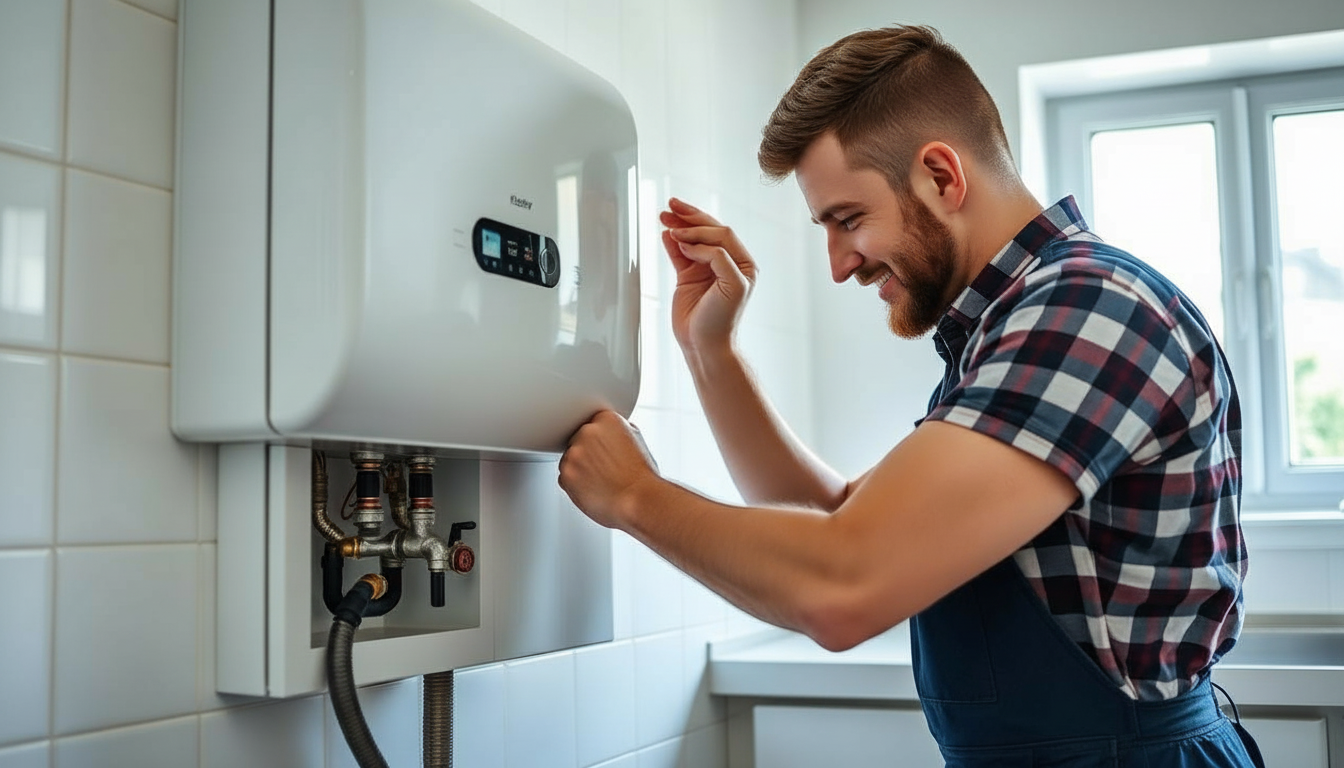
Boiler Pressure Low: How to Fix It (Glasgow)
There is rarely a worse time to discover your heating has cut out than a damp Tuesday night in November when the temperature is dropping across the West End. You head to the cupboard, check the display, and see the dreaded "F1" or "E1" fault code, or a needle sitting stubbornly at zero.
If your boiler pressure is low, your system won't fire up. It is a safety feature designed to prevent the heat exchanger from damaging itself without enough water to move the heat around. While a drop in pressure can be stressful, it doesn't always mean you need a brand-new boiler.
In this guide, we will walk through why your combi boiler pressure might be dropping and how you can safely top it up yourself before calling out an engineer.
Understanding Your Boiler Pressure Gauge
Most homes in Glasgow—from the red sandstone tenements in Shawlands to the modern builds in Robroyston—utilize a combi boiler. These are "sealed" systems, meaning the water that goes through your radiators stays inside a closed loop.
To check your pressure, look for a circular dial or a digital display on the front of the unit:
* The Green Zone: Usually between 1.0 and 1.5 bar. This is where your boiler wants to be when the heating is cold.
* The Red Zone (Lower): Anything below 0.5 bar. This is when the boiler will typically lock out and stop working.
* The Red Zone (Higher): Anything above 2.5 or 3.0 bar. This indicates the pressure is too high, usually due to a fault with the expansion vessel or overfilling.
Why is My Boiler Losing Pressure?
If you find your boiler pressure low once a year after the summer break, it might just need a tiny "top-up." However, if you are repressurising the system every few days, you have a problem.
1. A Leak in the System
This is the most common culprit. It doesn’t have to be a massive puddle on the floor; a tiny "weep" on a radiator valve or a pinhole leak in a pipe under the floorboards is enough to drop the pressure over 24 hours. Given the age of many Glasgow properties, original copper piping can sometimes succumb to corrosion.
2. Bleeding Radiators
If you recently bled your radiators to get rid of cold spots, you have effectively let air (and therefore pressure) out of the system. You must always top up the water pressure after bleeding radiators.
3. A Faulty Pressure Relief Valve (PRV)
If the PRV is old or has been triggered by high pressure recently, it might not have seated back correctly. If you see a small copper pipe on the outside wall of your house dripping water, your PRV likely needs replacing.
4. Expansion Vessel Issues
Inside your boiler is a small tank called an expansion vessel. It contains a rubber diaphragm and air. If the air side loses its charge, there is nowhere for the water to expand when it gets hot, causing the pressure to spike and then dump out of the PRV, leaving the boiler empty once it cools down.
Checklist: How to Top Up Your Boiler Pressure
Before calling for a repair, you can try to "repressurise" the system yourself using the filling loop.
- Switch the boiler off: Ensure the system is cool.
- Locate the filling loop: This is usually a silver braided flexible hose with two small taps at either end, located directly underneath the boiler.
- Attach the loop (if necessary): On some older models, the hose might be detached at one end. Screw it on firmly by hand.
- Open the valves: Turn the small black levers or use a screwdriver to turn the slots. You should hear the sound of water rushing into the boiler.
- Watch the gauge: Slowly let the water in until the needle reaches 1.2 or 1.5 bar. Do not go into the red.
- Close the valves: Ensure both taps are fully closed and tightened.
- Turn the boiler back on: The fault code should clear, and the boiler should fire up.
What Does a Professional Repair Cost?
If topping up the water doesn't solve the issue, or if the boiler losing pressure becomes a recurring weekly event, you need a qualified engineer to investigate.
In Glasgow, you should expect the following price ranges for common pressure-related repairs (estimated for 2026):
| Repair Type | Estimated Cost (Inc. Parts & Labour) | Time Required |
| :--- | :--- | :--- |
| System Top-up & Leak Search | £80 - £110 | 1 Hour |
| Replace Radiator Valve | £90 - £140 | 1-2 Hours |
| Replace Pressure Relief Valve | £120 - £190 | 1-2 Hours |
| Expansion Vessel Re-charge | £90 - £130 | 1 Hour |
| Replace Expansion Vessel | £220 - £350 | 2-3 Hours |
When to Call an Engineer
If you see water leaking from the internal components of the boiler itself, do not attempt to fix it. Modern boilers from brands like Worcester Bosch, Vaillant, or Ideal are complex machines. While the filling loop is designed for homeowner use, mirrors and internal seals are not.
Additionally, if your pressure gauge is climbing rapidly into the red (3.0+ bar) every time the heating comes on, shut the system off and call a professional. This usually indicates a failure in the expansion vessel which can cause significant damage if left unchecked.
Low Pressure in Glasgow Tenements
Tenement flats can be particularly tricky. If you live on the top floor of a high-ceilinged Victorian building, your boiler has to work harder to push water through older, larger-diameter pipes and heavy cast-iron radiators. If your pressure is consistently low, it may be that the internal pump is struggling or the system requires a power flush to remove decades of sludge that is putting a strain on the unit.
Frequently Asked Questions
Can I leave my boiler on with low pressure?
Most modern boilers will automatically shut down if the pressure drops too low. However, running a pump with no water in it can cause it to overheat and burn out. If the pressure is below 0.5 bar, switch the boiler off at the wall until it can be topped up.
Why does my pressure go up when the heating is on?
It is normal for pressure to rise slightly (usually by 0.3 to 0.5 bar) as the water heats up and expands. However, if it jumps from 1.0 bar to 3.0 bar within minutes, your expansion vessel has likely failed or lost its air charge.
I can't find a leak, but I'm still losing pressure. Where is the water going?
If you have checked every radiator valve and there are no damp patches on the ceiling, the leak might be "hidden." This often happens in the heat exchanger inside the boiler (where water evaporates and goes out the flue) or via the discharge pipe leading outside. A qualified engineer can use a pressure test to find the exact location of the loss.
For expert assistance with your boiler or heating system in the Greater Glasgow area, contact Glasgow Plumbing & Heating on 0141 674 6666 or visit glasgowplumbingheating.com/contact.
Related Articles
Heat Pump Installation in Glasgow: Complete 2025 Guide
Everything Glasgow homeowners need to know about heat pump installation, costs, grants, and whether they're suitable for Scottish homes.
Complete Boiler Servicing Guide for Glasgow Homeowners
Everything you need to know about boiler servicing in Glasgow, including costs, frequency, and what to expect from a qualified engineer.
Central Heating Efficiency: 10 Tips to Lower Your Glasgow Energy Bills
Practical advice for improving central heating efficiency in Glasgow homes, helping you stay warm while reducing energy costs.
Need Expert Help?
Our Gas Safe & NICEIC approved engineers are available 24/7 for emergencies and can usually attend routine work within 24-48 hours.